|
Garden & Pond Top Tips
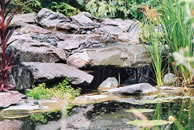
Provide underwater structures. These are important because they provide a refuge for smaller fish. Place pallets, formed into tepee shapes, on the bottom of ponds. Christmas trees are another good structure. You should burn off the needles first, as they can plug pumps and put a large amount of organic material into the pond. You don't want to build more than three or four structures per acre.
|
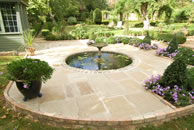
At imas, we will look after your entire garden, from your lawns to your beds and borders as if they are our very own. But if we can help you to look after your garden, this will save you money and help us provide a comprehensive service. |
Tips on Pruning
- Best tools for pruning are sharp secateurs and a pruning saw with a narrow
blade.
- Prune flowering shrubs that bloom in Spring, straight after flowering.
- Prune Summer flowering shrubs between January and March, before new growth
starts.
- Prune conifers in late Summer of early Autumn.
- In May, prune evergreens that are not in flower.
- Prune other evergreens after flowering.
- To keep a base of a hedge leafy cut into a pyramid shape in Spring, so
that the top is narrower than the base. If a hedge is pruned wider at the
top than the bottom the lower part will be shaded and the foliage will fall
off allowing the top growth to spread, compounding the problem.
- If a hedge is too dense, cut it back to the main stems on one side only.
Let the hedge recover and produce new growth for a year, then cut back the
other side.
- If the hedge has become too tall, cut back every second shrub to within
a few inches of the ground. New shoots should sprout around the severed trunks.
Cut back the remaining shrubs the following year.
- Privet, Yew, Holly, Berberis, Forsythia, Roses and Spiraeas respond well
to hard pruning.
- For climbers that flower on new growth, e.g. Buddleia, Clematis Jackmanii,
Winter pruning is best.
- For climbers that flower on previous year's growth, e.g. early flowering
Jasmine, Forsythia, Honeysuckle and ornamental Quince, prune after flowering.
- March is the best time to prune hybrid tea and floribunda roses. Cut out
dead, diseased or thin wood and trim back the main shoots. When cutting back
main shoots count buds from base of each shoot and cut just above the second
or third one. N.B. The length of shoot is less important than the number
of buds.
- Shrub roses are best pruned in winter. As both old and modern roses produce
most of their flowers on shoots produced from old wood, prune lightly. Remove
dead, thin and decayed wood and shorted main stems by about one third.
- Prune rambling roses in Autumn. Cut untidy, flowered shoots right down
to the base and tie new shoots to the trellis or support. If there are a
few new shoots, leave some of the flowered shoots in place cutting back just
a little.
- Climbing roses are also best pruned in Autumn. Remove any crossing or thin
shoots and reduce the height of the main stems by about one third. This prevents
them being blown about by the wind. Remove any side shoots that spoil the
shape and cut back the others by about two thirds.
- Miniature roses should be pruned in March. Cut off any dead, diseased or
thin wood and trim back the main stems to about one third of their length.
|
|